
Composite Analysis
Intro:
Composite materials are core to how we make lightweight long term parts on the car. At a fundamental level, composite materials are what they sound like, mixed materials. This comes mixed mechanical behavior and varying failure modes not typical of homogenous materials.
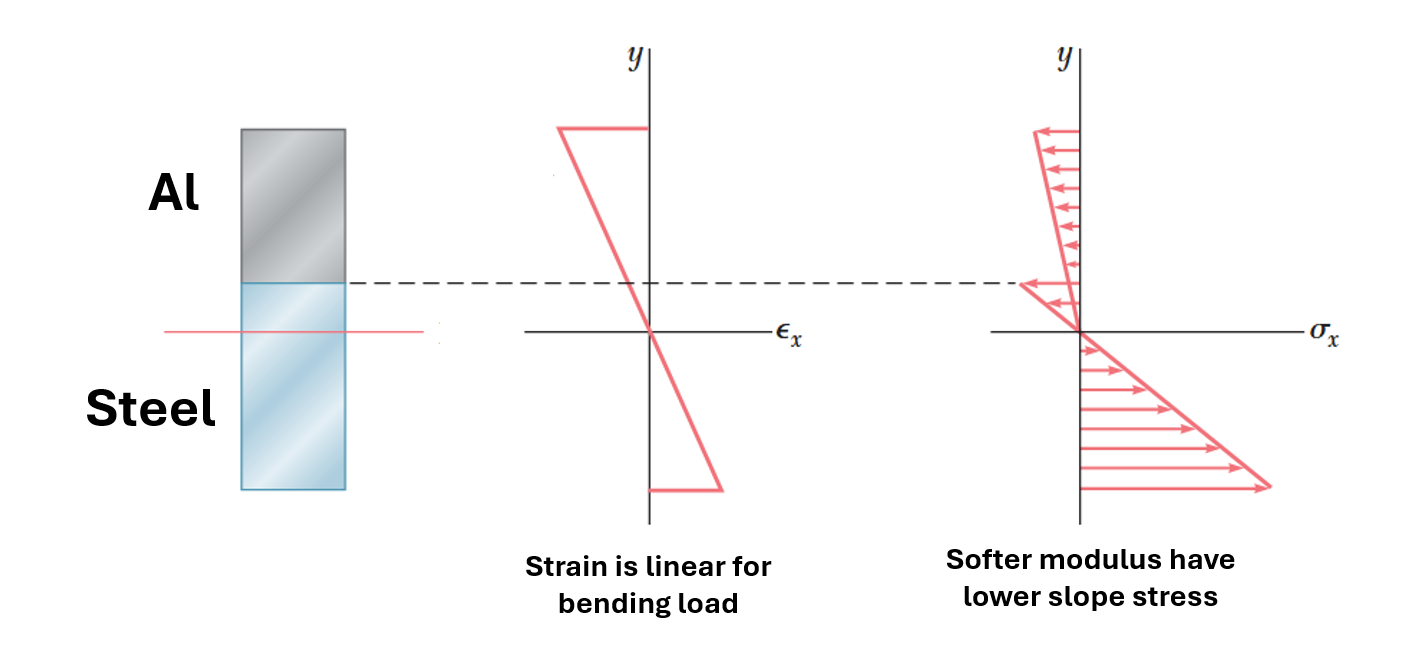
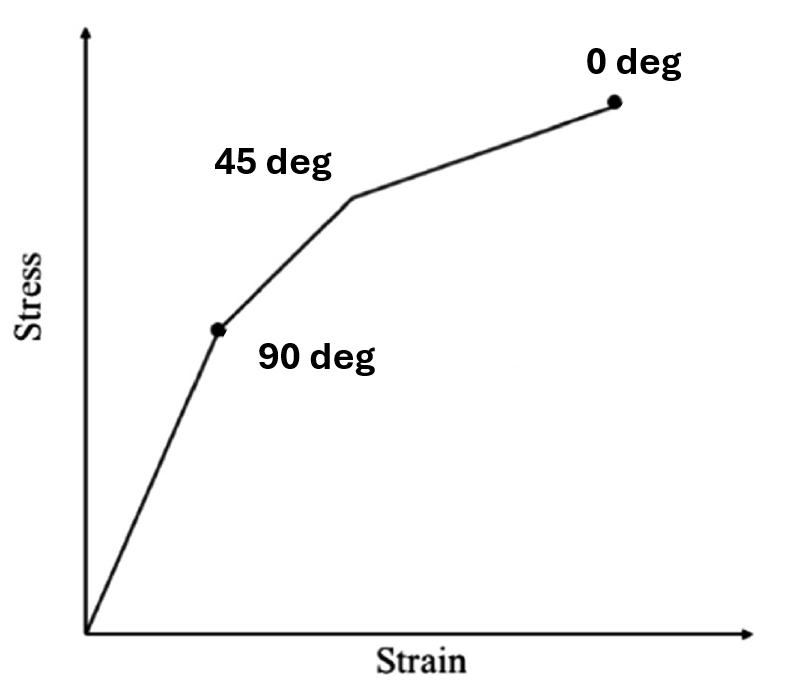
Traditional composites are more common in civil engineering, think concrete and rebar. Our club primarily does polymer composite work with thin glass, kevlar, or carbon fiber, which are more common in mechanical/aerospace applications. "Composites" will from now on be in reference to GFRP or CFRP, glass fiber reignforced polymer or carbon fiber reignforced polymer. The two components of composites are the fibre and matrix, the fibre contains the material strength and the matrix is the medium that the load is exchanged. The matrix is usually a elastic polymer and fibre is usually a brittle glass or graphite. Another way to think about it is, graphite fibre lack transverse strength that make them break immediatly upon off-axis loads that gets compenated for by the matrix, this can be seen in the figure below. The fibre generates most of the modulus and strength, the matrix accounts to off-axis loading.
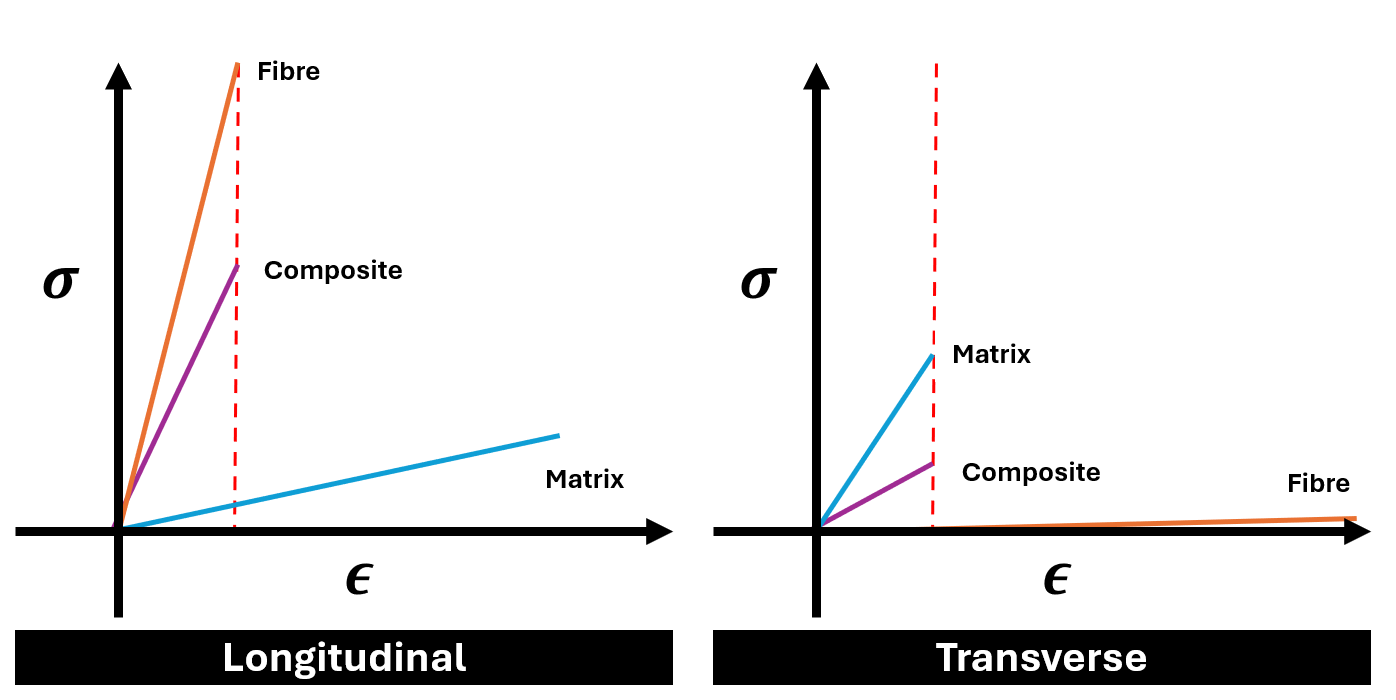
For a uni-directional fabric, fabric where the fibre only go in one direction, 88.5% of the total potential stiffness is in the longitudinal/fibre direction, 5.25% in the transverse direction, and 1.6% is shear stiffness. These charactertics follow with textiles fabrics, plain weave is 44.5% for longitudinal and transverse directions.
The choice to use composites over metallic components is a common debate and usually comes down a couple issues with composites:
Pros:
Con:
This page will go over how to think, design, analyze, and manufacture with composites.
Think: